
Users & permissions
A workspace can have more than one person in it. Access Control is where you invite those people and decide what each one is allowed to do, from full control of everything down to read-only viewing. You invite someone by email, they accept, and from then on their access level governs every action they can take on your instances, storage, and settings.
Open it from Security in the sidebar, then Access Control. The page lives at the /acl route.
Invite someone by email
On the Access Control page, select Invite User, enter the person's email address, and choose the access level you want them to have. They receive an invitation and appear in the members table right away. Until they accept, their row shows as not yet accepted.
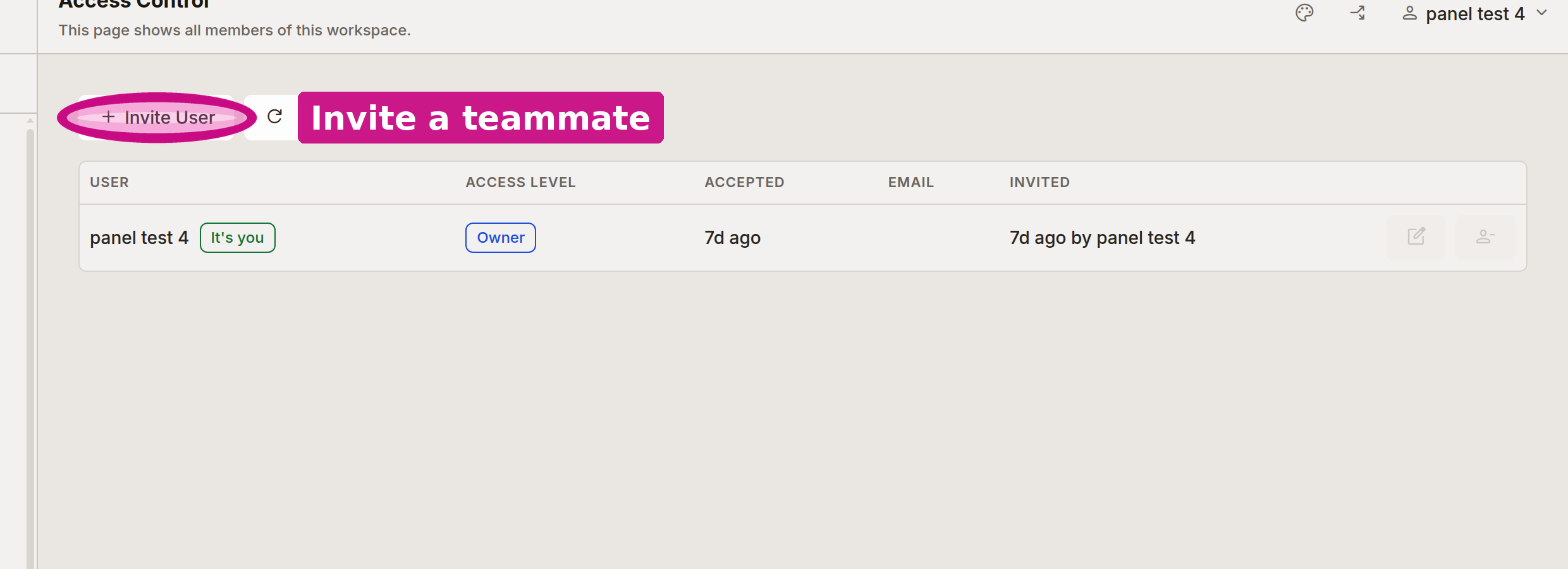
The Invite User button is circled above.
The four access levels
Every member holds one access level. They run from most power to least. Give people the lowest level that still lets them do their job.
| Access level | What they can do |
|---|---|
| Owner | Full control of the workspace, including billing and deleting the workspace itself. An owner can do everything the other levels can, and the things only an owner should. |
| Administrator | Manage resources and members. An administrator can create and change instances and other resources, and invite, edit, or remove members. They do not have the owner-only powers over billing and workspace deletion. |
| Editor | Create and change resources. An editor can build and modify instances and the things around them, but does not manage the workspace's members. |
| Viewer | Read only. A viewer can see the workspace and its resources but cannot change anything. |
Least privilege
Start people at Viewer or Editor. You can raise someone's level later in one click, and it is far easier than walking back access that was too broad.
Change a member's access level
To change what someone can do, use the row action to edit that member and pick a new access level. The change takes effect immediately, so a member you move from Editor to Viewer loses the ability to make changes right away.
Remove a member
To take someone out of the workspace, use the row action to remove that member. Their access ends immediately. If you only want to pause their access rather than end it, lower their level to Viewer instead of removing them.
Every workspace needs an owner
Do not remove or downgrade the last owner. A workspace has to keep at least one owner so that billing and workspace-level settings always have someone who can manage them.
Related
- Security overview
- API tokens for giving scripts access instead of people.
- Audit Logs to see who changed what.